You buy solar to save money, save the planet and help create a more sustainable future. But here is a question to ask: What is your system’s current performance?
Most solar owners think that if they have panels on the roof and the inverter is working, then everything is ok. In reality, this is not the case. Whether it’s one poor panel, a loose connection, or a shading problem, it can be a silent cost to your energy production, rendering it for weeks, if not months, without anyone realising it.
That’s where real-time solar performance monitoring can make a difference. It works like a 24/7 protector for your investment in solar panels, preventing problems from turning into costly ones. This is why professional solar operations and maintenance services in India are no longer an option but an essential element of a system that performs best year after year.
What Is Real-Time Solar Performance Monitoring?
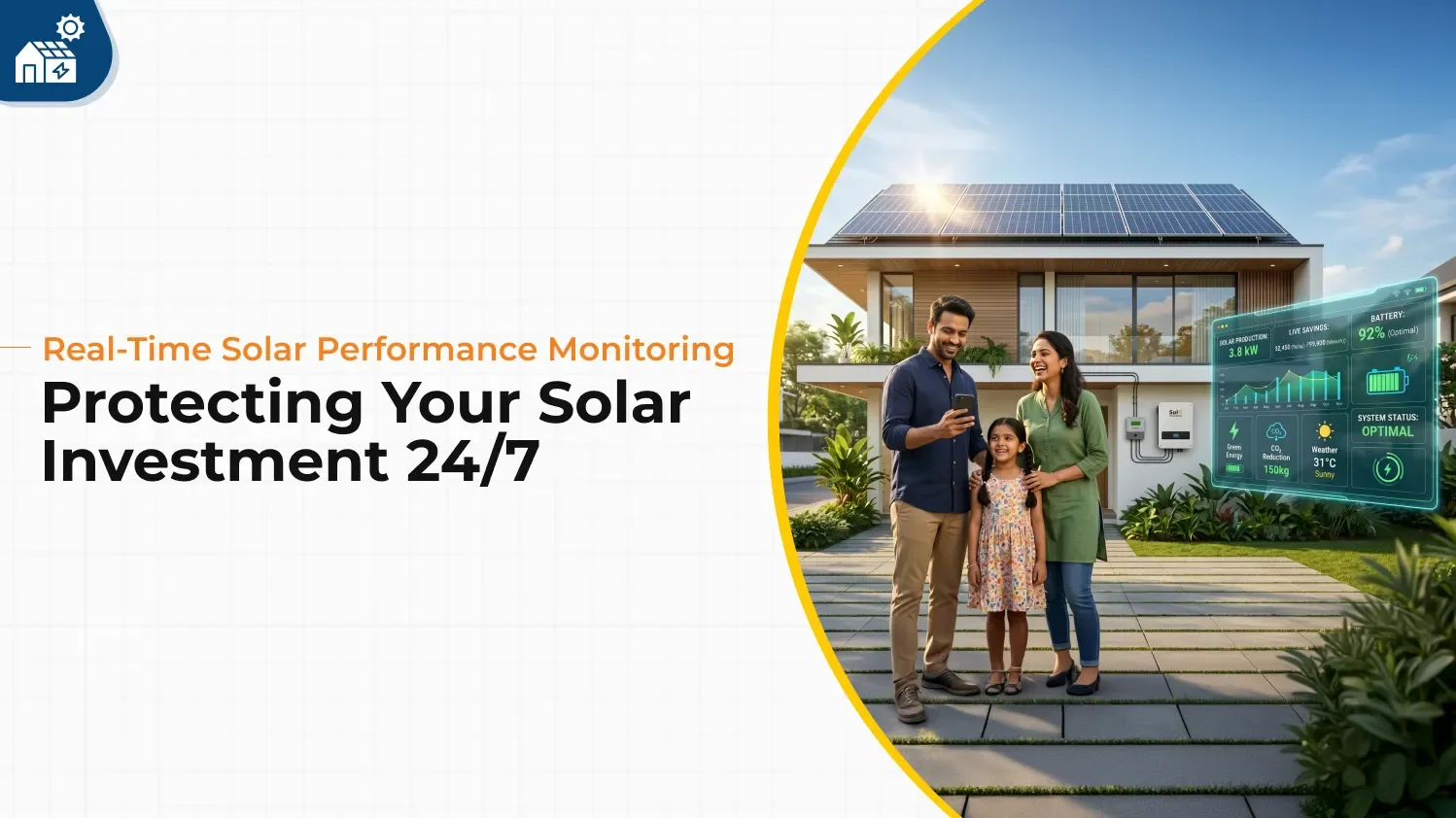
Solar monitoring in real-time involves sensors, data loggers and cloud systems that continuously monitor the performance of the solar system, including energy generated, energy efficiency and system health, without the need for periodic manual monitoring.
- What amount of energy is your panel producing today?
- To see whether the production is in line with the forecast weather conditions
- When any of the components is not working efficiently, such as an inverter, panel or string
- To recognise the historical pattern that shows the seasonal fluctuations or the long-term decline
It’s a huge asset for anyone who operates a rooftop system, from homeowners to commercial owners. In the world of commercial solar panel maintenance, real-time data can make all the difference between minor issues and significant problems.
The Hidden Cost of Not Monitoring Your System
Although solar panels are highly durable, they are not maintenance-free. Minor losses in solar systems caused by a lack of solar operations and maintenance can add up over time and can have a major impact on system performance.
Consider these scenarios:
- The solar string output is lowered by 30% when the bird nets are built on the panel shades
- If the inverter is operating at 80% efficiency, it’s not noticeable for 6 months
- During the summer, dust accumulates on the panels, reducing the solar gain by 10 to 15%
Small solar system faults can be insignificant when looked at one at a time, but when combined, they can cause major energy losses. The ability to detect issues in real-time means that maintenance can be done quickly, and you can avoid costly damage.
How Real-Time Monitoring Works in Practice
Solar monitoring systems today are advanced, yet easy to use. The process in practice:
- Data Collection at the Panel Level: Smart inverters capture panel-level performance data every few seconds, including voltage, current, temperature, and power
- Cloud-Based Analysis: Data is sent to the cloud, where algorithms compare output using weather, irradiance, historical benchmarks, alerting deviations
- Alerts and Notifications: In case of issues, alerts are sent via text, email, or dashboard to owners, managers, solar operations and maintenance companies
- Remote Diagnostics and On-Site Response: Many issues are remotely identified and resolved, with monitoring data guiding technicians to reduce costs
Benefits for Commercial Solar Installations
Downtime with the solar system is a problem that can result in a loss of money for businesses, leaving them more vulnerable to risks. Collaborating with solar operations and maintenance companies like White Desert in Kutch and leveraging monitoring platforms can help increase the reliability of your solar energy systems, accelerate fault detection, reduce downtime, and optimise energy system performance.
- Highest possible energy return and return on investment (ROI)
- Instead of break-fix, predictive maintenance scheduling
- ESG and sustainability commitments reporting to performance
- Compliance documents for utilities and grid operators
- Documented system health records which provide reduced insurance liability
Scheduled maintenance is less efficient due to the fact that it is a service that is performed on a regular schedule, whereas performance-based maintenance is performed when needed.
What to Look for in Solar Project Monitoring Services
Not all monitoring platforms offer the same capabilities. These are the major criteria to consider when assessing renewable energy performance tracking services:
- Not only system-level monitoring, but also at the panel or string level
- Appropriate measurement and benchmarking instruments for solar performance
- Automated fault detection, with the support of root cause analysis
- Mobile App for real-time on-the-go tracking
- Simple and smooth integration with a maintenance ticketing system for issue tracking
- The capability of storing data to compare over time
- Connects with BMS.Integrates with API and BMS
Good solar project monitoring services do more than just gather data; they turn it into useful insights that support better decisions and help ensure the system performs well over the long term.
Solar Operations and Maintenance: Beyond Monitoring
Solar operations and maintenance fix problems when they occur in solar systems, and monitoring can detect problems in solar systems. Care plan consists of inspection, performance monitoring, cleaning and preventive maintenance for optimum efficiency.
- Scheduled preventive inspections with thermal imaging and IV curve testing
- Cleaning of the panels is combined with herbicide application and vegetation management
- Increases inverter maintenance help and firmware improvements
- Assesses cable and connection integrity to ensure reliable system performance
- Evaluation and yield data analysis
- Emergency response concerning weather events or failures
For utility-scale renewable facility servicing, the inclusion of monitoring information in O&M scheduling forms a closed-loop system. Problems are identified, diagnosed, dispatched, repaired and checked in one place.
The Future of Solar Monitoring: AI and Predictive Analytics
Predictive maintenance, not reactive, is the next evolution in solar energy plant maintenance. Millions of solar fleet data points are now being fed into machine learning models so that failures in individual components can be predicted, rather than occurring.
For example:
- Failure prediction of Inverters based on temperature cycling pattern
- Forecasting panel degradation with a 10-year performance curve
- Soiling alert systems based on local weather and satellite data
- Optimisation of export for the grid according to live tariff data
AI-powered analytics in renewable energy enable commercial and utility solar operators to shift from reactive maintenance to predictive, data-driven asset management for improved performance and efficiency.
Conclusion
Solar energy is one of the best investments you can make for your finances, your business and the planet. Although an asset, like all assets, it requires active management to unlock its potential for a 25 to 30-year life cycle.
Real-time monitoring of solar plant performance is no longer an option for large utility plants. Any solar owner who desires complete visibility, rapid fault response and maximum return on investment must use it.
From a single commercial roof to a portfolio of solar assets, intelligent monitoring and professional solar panel maintenance and repair services will ensure the life of your solar system for decades.
In White Desert, we have the conviction that all solar investments should be covered by world-class monitoring and maintenance. After all, if the sun is working in your favour, you want to know about it.