Poor solar components wear out quickly, can be warranty killers, and are expensive to repair. Reliable solar procurement services can help EPC companies find certified panels, inverters, and mounting structures that are capable of lasting for 25+ years. Smart sourcing safeguards project timelines, budgets and client trust.
Introduction
A solar installer wins a 2MW commercial project. The client is highly satisfied, the contract is signed, and installation starts on time. After 6 months, micro-cracks appear in panels. Inverters trip randomly. The mounting structure rusts a lot quicker than anticipated in the coastal humidity.
What went wrong? There was no inspection of the source of the components.
This situation happens more frequently than most people think. The weakest of a solar EPC (Engineering, Procurement, and Construction) project is the project. But in most cases, it all comes down to one thing: who was responsible for the parts, how carefully the company screened the parts, and whether industry best practices were adopted in the solar components procurement from the beginning.
Why Component Quality Is the Backbone of Every Solar Project?
Solar initiatives are not investments with a very short time horizon. The average solar power plant should operate for 25 to 30 years without encountering significant problems. A cheap inverter or an inferior panel cannot cause any trouble for this long.
The International Renewable Energy Agency (IRENA) estimates that solar will be several times larger a decade from now as countries move towards their renewable targets. As with growth, component demand is also increasing, while also increasing the opportunity for low-quality, mislabelled, or counterfeit components to be introduced into the supply chain.
Here’s what poor component quality actually leads to:
- Less energy output: This means less contribution to ROI from panels
- Expensive downtime: Cheap connectors break, often leading to expensive downtime
- Safety hazards: Poorly designed wiring can create safety risks and failure points
- Warranty conflicts: Unapproved components may lead to invalidating warranties
- Reputational risk: Badly performed projects can affect future projects and referrals
That’s why solar component procurement should be as much of a priority as the engineering design itself.
What Is Solar Procurement, Exactly?
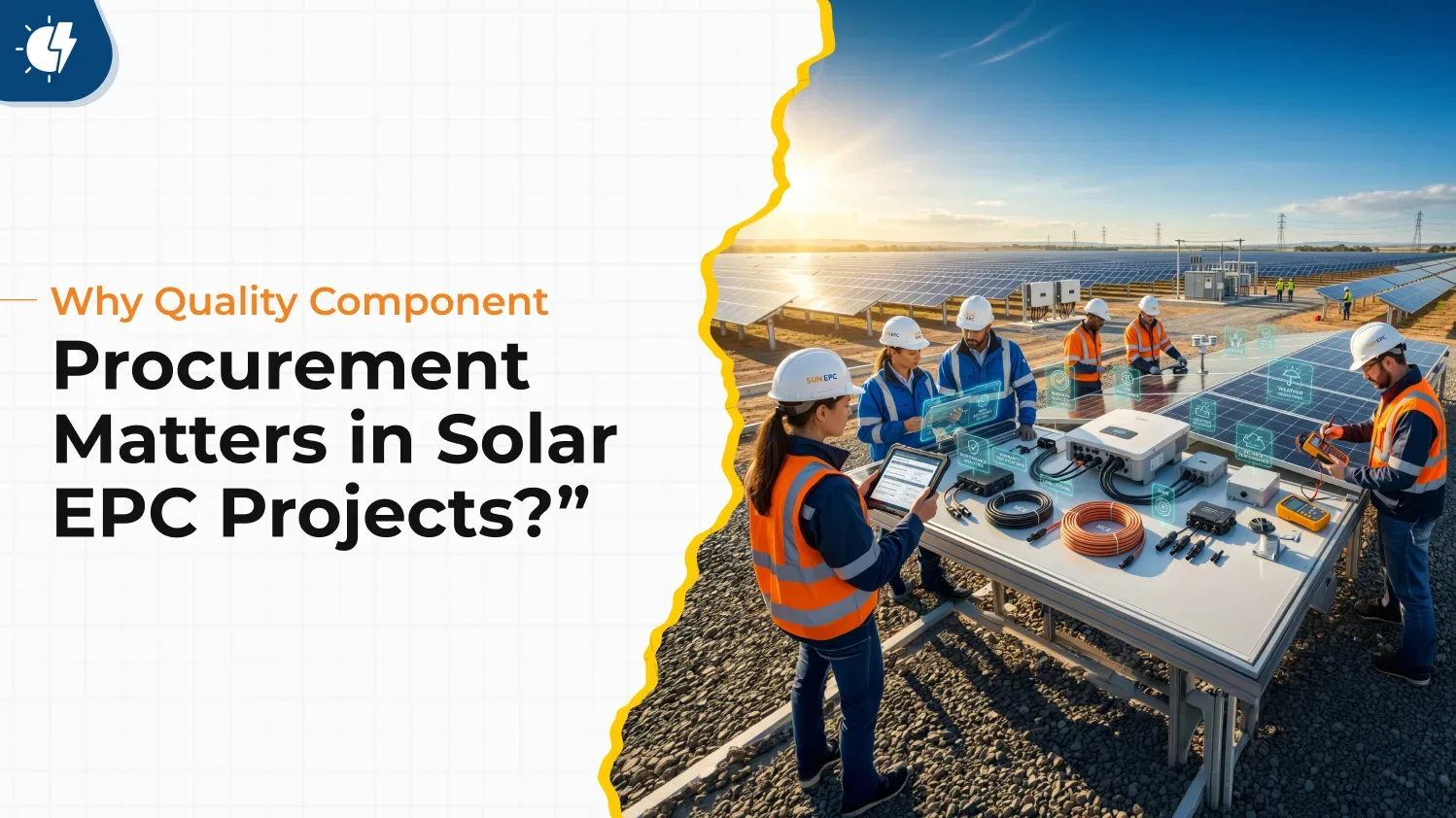
Solar procurement is the process of sourcing, vetting, purchasing and coordinating the delivery of all physical components required for a solar installation, such as solar panels, inverters, batteries, mounting structures, cables, connectors and balance-of-system (BOS) components.
Not all of it is “buying stuff. Key components of good solar procurement solutions include reviewing manufacturers’ certificates, comparing technical datasheets, confirming that the materials meet local grid codes, negotiating appropriate pricing without sacrificing quality, and ensuring that materials are on-site when required but not before (storage-related issues) or after (project delays).
Real-Life Example: The Difference Procurement Makes
Suppose two EPC contractors are bidding on a 500 kW rooftop project.
Contractor A buys panels directly from the lowest bidder, without verifying certifications. The panels are delivered, with 8% of them having slight imperfections. The project is delayed by 3 weeks when an issue is detected at installation time.
Contractor B is affiliated with a solar equipment sourcing company that pre-verifies each batch, verifies IEC certification and verifies the compatibility of all equipment with the inverter brand selected for the project. Works were completed on time, and two additional sites were signed by the client the next year.
The design difference wasn’t significant. It was procurement.
Key Components That Need Careful Sourcing
| Component | Why Quality Matters |
| Solar Panels | Directly impacts energy yield and degradation rate over 25 years |
| Inverters | Efficiently converts DC to AC, causing frequent faults when poor units are used |
| Mounting Structures | Resists wind, corrosion, and weather for decades of years |
| Cables & Connectors | Avoids risk of fire, overheating, and power loss |
| Batteries (for hybrid systems) | Evaluates the reliability of backups and cycles |
| Monitoring Systems | Affects how accurately performance issues are detected |
How Professional Procurement Support Helps EPC Companies?
Many EPC companies, particularly small EPCs, lack an in-house resource to manage vendor research, price negotiation and quality audits. This is where solar EPC procurement services come in.
Here’s what good procurement partners typically handle:
- Vendor vetting: Checks on Manufacturing Units, Certifications (IEC, UL, BIS), and Previous Project Experience of the Vendor
- Price benchmarking: getting the fair market price without compromising on specs by comparing quotes with different suppliers
- Logistics coordination: coordinating transport and customs (for imports) and delivery schedules
- Quality Inspection: Pre-shipment inspection to prevent defects before the materials are shipped out from the factory
- Documentation support: Verifying documentation aligns with subsidy regulations and grid connection standards
For companies with multiple projects in different areas, the solar panel procurement process can be a huge burden, as they must spend time searching for new suppliers and allocating the right resources to each project. However, using a solar panel procurement service can relieve them of this burden, allowing their EPC teams to concentrate on design, installation and client service.
How Global Sourcing Strengthens Solar EPC Projects?
The principles of procurement remain unchanged, whether it’s a small-scale rooftop system installed in Gujarat, or a large-scale solar project being developed for global deployment.
Incentives for local businesses include procurement partners with the local knowledge to navigate logistics, document state subsidies, understand local transportation systems, and meet climate-specific component needs (such as anti-corrosion coatings for coastal areas, and increased temperature resistance for desert installations).
Meanwhile, EPC contractors who wish to grow their business and expand beyond the domestic market must look for partners that can tap the supply chain of global brands and handle cross-border logistics efficiently. The key to solar procurement services is that it is both locally responsive and globally sourced.
Benefits of Getting Procurement Right From Day One
- Reduced warranty issues and field failures
- Predictable project timelines
- Improved long-term relationships with customers
- Reduced maintenance costs over the life of the product
- Increased negotiating leverage by acquiring sales in bulk and repeat purchases
- Subsidy and certification will be more easily met
Conclusion
Many factors have to be put in place before a solar project is successful. The quality of the panels, inverters, cables and structures selected during procurement is what makes a system good for decades or a constant problem.
Building a relationship with a reputable solar procurement solutions provider is no longer an option for EPCs looking for consistent results; it’s a necessity. Some companies, such as White Desert, are involved with the EPC projects and take care of the vendor vetting, quality control and delivery coordination so there are no surprises along the way.
Strategic procurement isn’t simply cost-saving. It protects reputations, builds customer confidence, and supports the long-term performance of solar projects for 25 years and beyond.