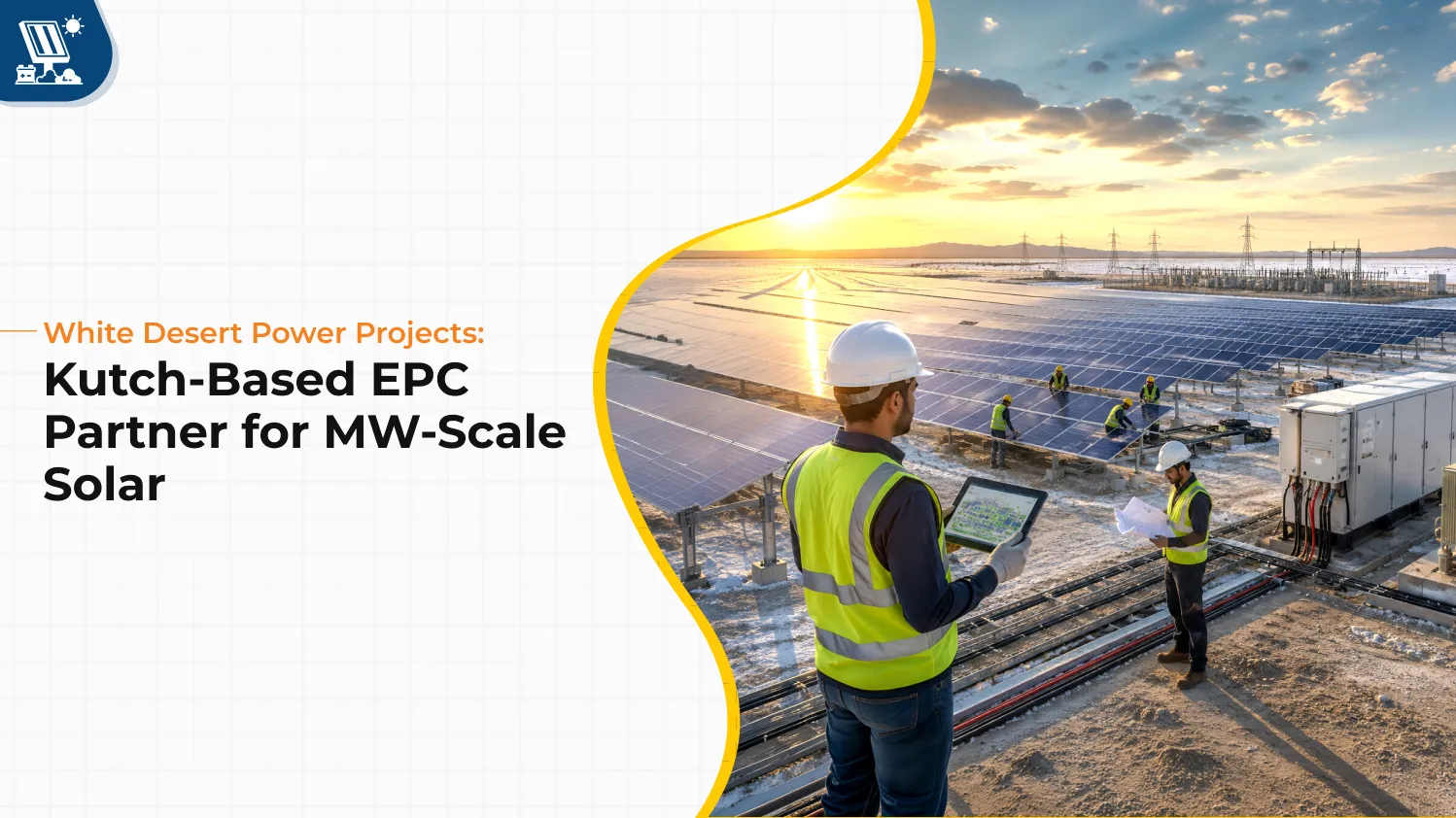
Kutch has become one of India's most active solar corridors, and for good reason. The irradiance is among the strongest in the country, land availability supports utility-scale development, and industrial demand for captive power keeps growing year over year. But building a MW-scale solar plant here isn't just about picking a good site with strong sun hours. It's about working with a partner who understands the region's specific engineering, grid, and environmental demands from day one, not one applying a generic playbook designed for a milder, less demanding climate.
White Desert Power Projects is a solar EPC company in Kutch built around exactly that. From site assessment through commissioning and long-term operations, the work is grounded in the realities of building and running solar assets in this specific environment. That distinction matters more than it might seem at first. A plant that looks identical on paper to one built in a cooler, less dusty region can perform very differently over its 25-year life if the design, construction, and maintenance approach doesn't account for local conditions from the outset.
Why Kutch Requires a Different Kind of EPC Partner
Kutch's advantages come with real operational demands attached. High ambient temperatures accelerate equipment wear on inverters and electronic components. Dust and dry conditions increase soiling rates well beyond what plants in wetter regions experience. Coastal humidity in parts of the region raises corrosion risk for mounting structures, connectors, and junction boxes. A plant designed without accounting for these factors underperforms its financial model well before it should, sometimes within just a few years of commissioning.
As a solar power company in Kutch, the approach here starts with those conditions, not around them. Site assessments account for local soiling rates when sizing cleaning schedules and determining panel spacing. Structural design factors in humidity exposure and selects mounting hardware and coatings accordingly. Grid coordination planning accounts for the density of utility-scale projects already operating in the region, since curtailment risk and interconnection queues are a real consideration here in a way they aren't in less developed solar markets. This is the difference between a plant that hits its projected output for 25 years and one that quietly falls short of it, year after year, without anyone quite pinpointing why.
None of this is unique to any single stage of a project. It has to be considered during site selection, carried through engineering and construction, and then reinforced through years of operations and maintenance. A plant that's well designed but poorly maintained ends up in the same underperforming position as one that was poorly designed from the start.
End-to-End Capability, Not a Single Service
Solar projects fail most often at the handoffs, the gap between design and construction, between construction and commissioning, between commissioning and long-term operations. Each of these transitions is a point where documentation gets lost, assumptions from one team don't carry over to the next, and small compromises made under schedule pressure quietly become permanent limitations on how the plant performs. As a full-service solar project developer in Kutch, White Desert Power Projects works across the entire project lifecycle so those handoffs don't become points of failure.
Engineering, Procurement, and Construction
Design and build execution for MW-scale plants, covering everything from site layout and structural engineering to component sourcing and construction management. This stage includes detailed load flow analysis, string sizing calculations, and structural design suited to local wind and soil conditions, with documentation built to support the operations phase that follows rather than treating handover as the finish line. As-built drawings, component specifications, and commissioning test results are compiled from the start, not reconstructed after the fact when an operations team eventually asks for them.
Financing and Subsidy Assistance
Navigating solar loans, government subsidy programs including PM Surya Ghar, and project financing structures suited to commercial and industrial scale, so the financial side of a project doesn't stall progress on the technical side. This includes helping clients understand which financing structure fits their specific situation, whether that's a straightforward loan against the asset, a capital expenditure model bundled into broader business financing, or a structure built around a specific power purchase agreement.
Operations and Maintenance
Structured, ROI-focused maintenance built around protecting a plant's 25-year financial model, not just responding to faults as they occur. This includes scheduled cleaning cycles calibrated to actual local soiling rates, predictive maintenance using performance trend data rather than fixed calendars alone, and documentation practices designed to support warranty claims years into a plant's operating life.
Performance Monitoring
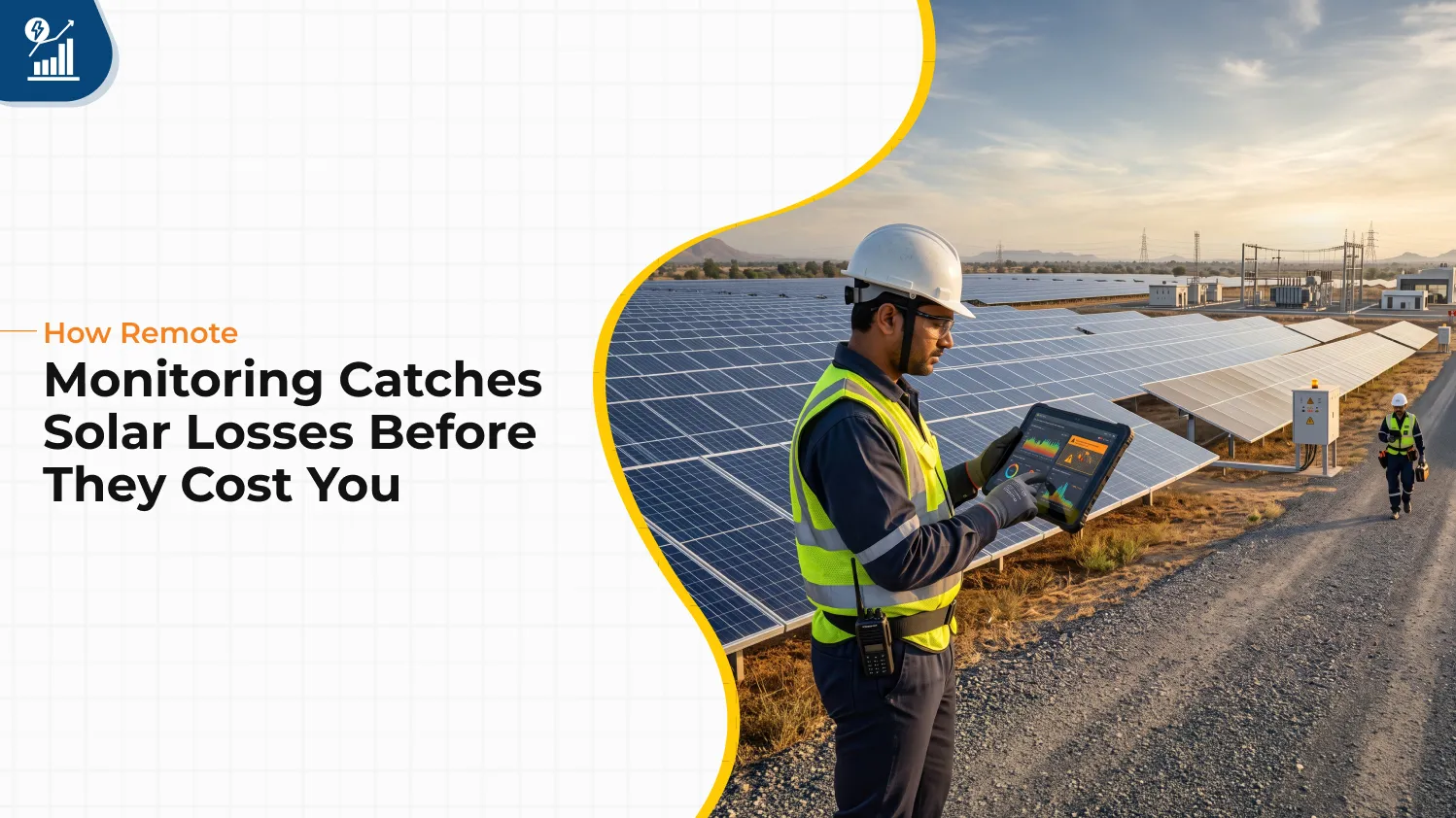
String and component-level remote monitoring designed to catch underperformance the day it starts, rather than the quarter someone finally notices the shortfall on a revenue report. Monitoring here is treated as the first stage of a response system, not a standalone dashboard that generates data nobody acts on.
Built for Utility-Scale and Industrial Clients
MW-scale solar isn't a homeowner's rooftop system scaled up. It involves grid coordination, PPA structuring, industrial load matching, and long-term asset management that residential installers typically aren't equipped to handle. As a renewable energy company in Kutch focused on this segment, the work here is built specifically around the needs of industrial and utility-scale clients:
Captive power plants sized to match industrial consumption patterns, reducing dependence on grid power and stabilizing long-term energy costs
Utility-scale ground-mount projects designed for grid compliance and curtailment management, with generation forecasting built into the plant's operational plan
Long-term O&M contracts structured around protecting financial performance, not just technical uptime, with reporting tied to the numbers a plant owner's finance team actually tracks
Documentation and reporting built to support lender, investor, and warranty requirements over the plant's operating life, since these stakeholders evaluate a plant's value based partly on how well its history is recorded
Industrial buyers in particular tend to have different priorities than residential ones. A manufacturing facility isn't just looking for lower electricity bills, it's looking for predictable, budgetable energy costs that hold steady against a backdrop of rising grid tariffs. A solar plant sized and financed correctly against that facility's actual load profile does more than reduce a bill, it removes a meaningful source of operating cost volatility from the business.
A Track Record Built on Industrial Trust
White Desert Power Projects has worked with organizations including Shriram Kaolin, GIPCL, Aditi Packaging, and Monex Solar Power LLP, delivering turnkey solar solutions in Kutch across engineering, execution, financing, and long-term operations. These are relationships built on plants that continue performing to their financial model years after commissioning, not just on the day the ribbon was cut. Working with industrial clients across different sectors, from mineral processing to petrochemicals to renewable energy generation itself, has meant adapting the same core engineering and operational discipline to a wide range of load profiles, site conditions, and financial structures.
That range matters. A plant built for a kaolin processing facility has different load patterns and site constraints than one built for a petrochemical operation or a standalone solar power generator. Treating each project as a genuinely distinct engineering problem, rather than a repeat of a standard template, is part of what keeps these relationships going beyond a single project.
Why Turnkey Matters More at MW Scale
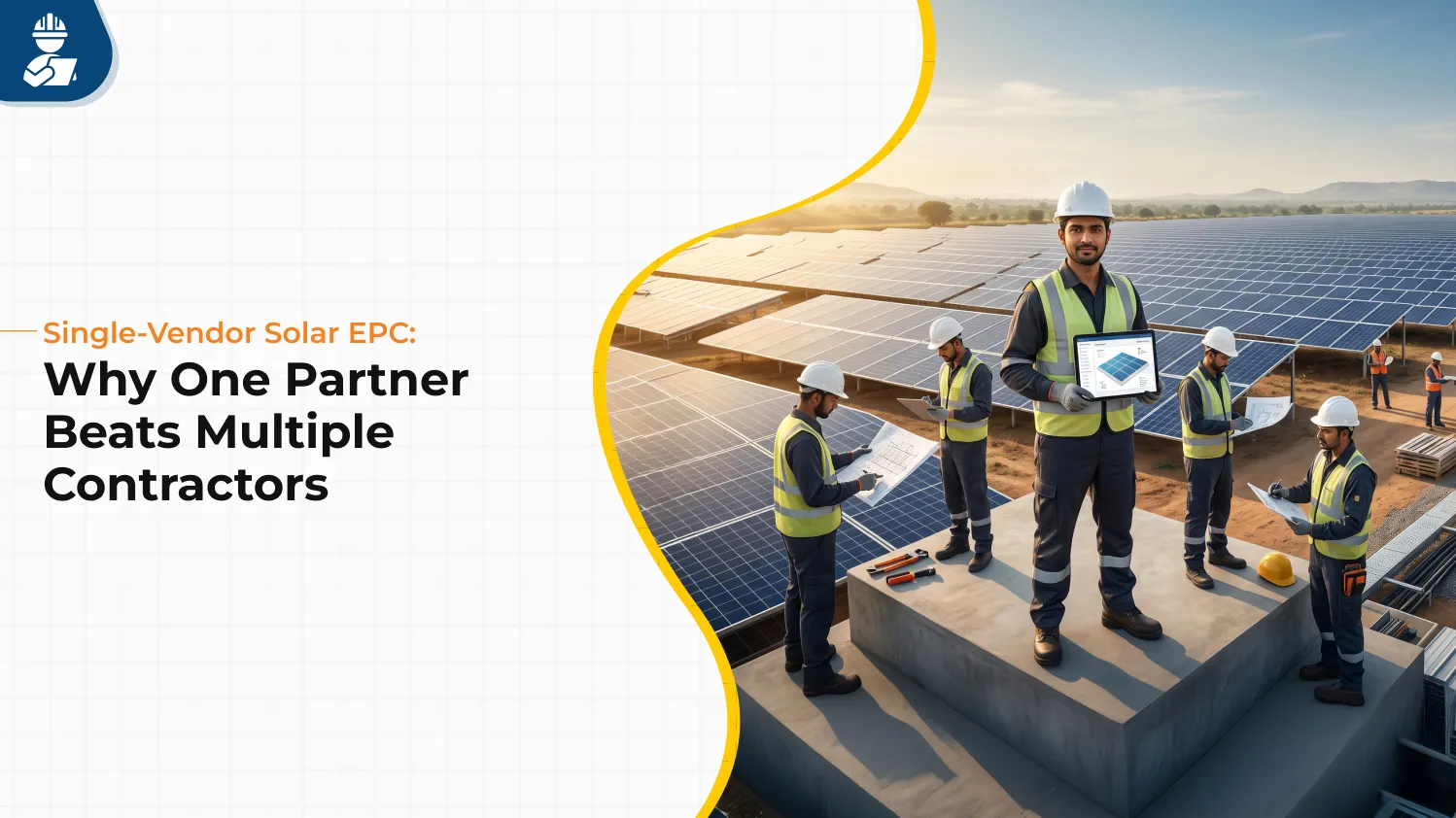
A fragmented approach, where design, construction, financing, and maintenance are handled by different vendors with no single point of accountability, creates exactly the kind of gaps where MW-scale projects lose value. When something goes wrong six months after commissioning, a fragmented setup often means weeks lost simply figuring out which vendor is responsible for the fix. A solar plant installation company in Kutch offering true turnkey delivery removes that fragmentation entirely:
Approach | Coordination Risk | Long-Term Accountability |
Multiple disconnected vendors | High, each handoff is a potential failure point | Diffused across parties, difficult to trace issues |
Single turnkey EPC and O&M partner | Low, one team carries the project through its lifecycle | Clear, tied to a partner invested in long-term performance |
For an asset expected to perform for 25 years, that difference in accountability compounds significantly over the plant's operating life. A single point of contact who was involved in the original design decisions is simply better positioned to diagnose a fault five years later than a maintenance vendor working from incomplete handover documentation and no direct knowledge of why a particular design choice was made.
Quality and Safety as a Foundation, Not an Afterthought
MW-scale solar construction involves significant electrical and structural risk if it isn't managed carefully. Component quality, installation standards, and adherence to grid compliance requirements aren't just regulatory checkboxes, they're what determines whether a plant operates safely and reliably for 25 years or develops recurring issues within its first few. Every stage of execution, from foundation work to electrical commissioning, follows documented quality control checkpoints, with testing and verification built into the schedule rather than treated as a final step before handover.
This matters particularly in a region like Kutch, where extreme temperatures and coastal conditions in parts of the region put additional stress on components and connections. A plant that passes commissioning tests but wasn't built with these stresses in mind tends to reveal its weaknesses within the first few years of operation, often in the form of connection failures, accelerated corrosion, or thermal-related component wear that a more careful build would have avoided.
Working With White Desert Power Projects
Every engagement starts with understanding the specific site, load requirements, and financial goals behind the project, whether it's a captive industrial plant, a utility-scale ground-mount installation, or a rooftop system for a commercial facility. From there, the work spans site assessment, engineering and construction, financing and subsidy navigation, and the long-term operations and monitoring needed to keep the plant performing against its original projections for the full 25 years.
The goal at every stage is straightforward: a plant that performs as close as possible to what the financial model promised, for as long as that model was built to last. That means treating commissioning as the midpoint of the relationship rather than the end of it, and staying involved through the years of operation where a plant's actual value is either protected or gradually eroded.
If you're planning a solar project in Kutch, whether it's early-stage site evaluation or you're ready to move into execution, talk to White Desert Power Projects about a turnkey approach built around this region's specific conditions and your project's long-term performance.