By the White Desert Power Projects Engineering Team | Solar EPC specialists in Kutch, Gujarat Technically reviewed by: White Desert Power Projects Design and Engineering Department Published: October 13, 2026 | Last updated: October 13, 2026
Quick answer: A captive solar plant is a dedicated installation built to meet a facility's own electricity demand, cutting grid purchases and stabilizing energy costs. In Mandvi, industrial plants must also be engineered for salt-laden coastal air (typically ISO 9223 category C4 to C5), high design wind speeds and Seismic Zone V, which means specified coatings, stainless fasteners, IP66 enclosures and salt-mist-certified panels, not an inland template.
Key takeaways:
Size the plant against hour-by-hour or shift-based load data, not a monthly average.
In C4 to C5 coastal air, zinc coatings lose roughly 2 to 8 micrometres a year, so coating thickness and material choice decide the structure's life.
Kutch combines a 50 m/s basic design wind speed with Seismic Zone V, so uplift and anchoring often govern the mounting design.
A plant only counts as "captive" under Indian electricity rules if it meets specific ownership and consumption tests, so confirm your structure early.
One accountable EPC team keeps coastal specifications intact from engineering through installation.
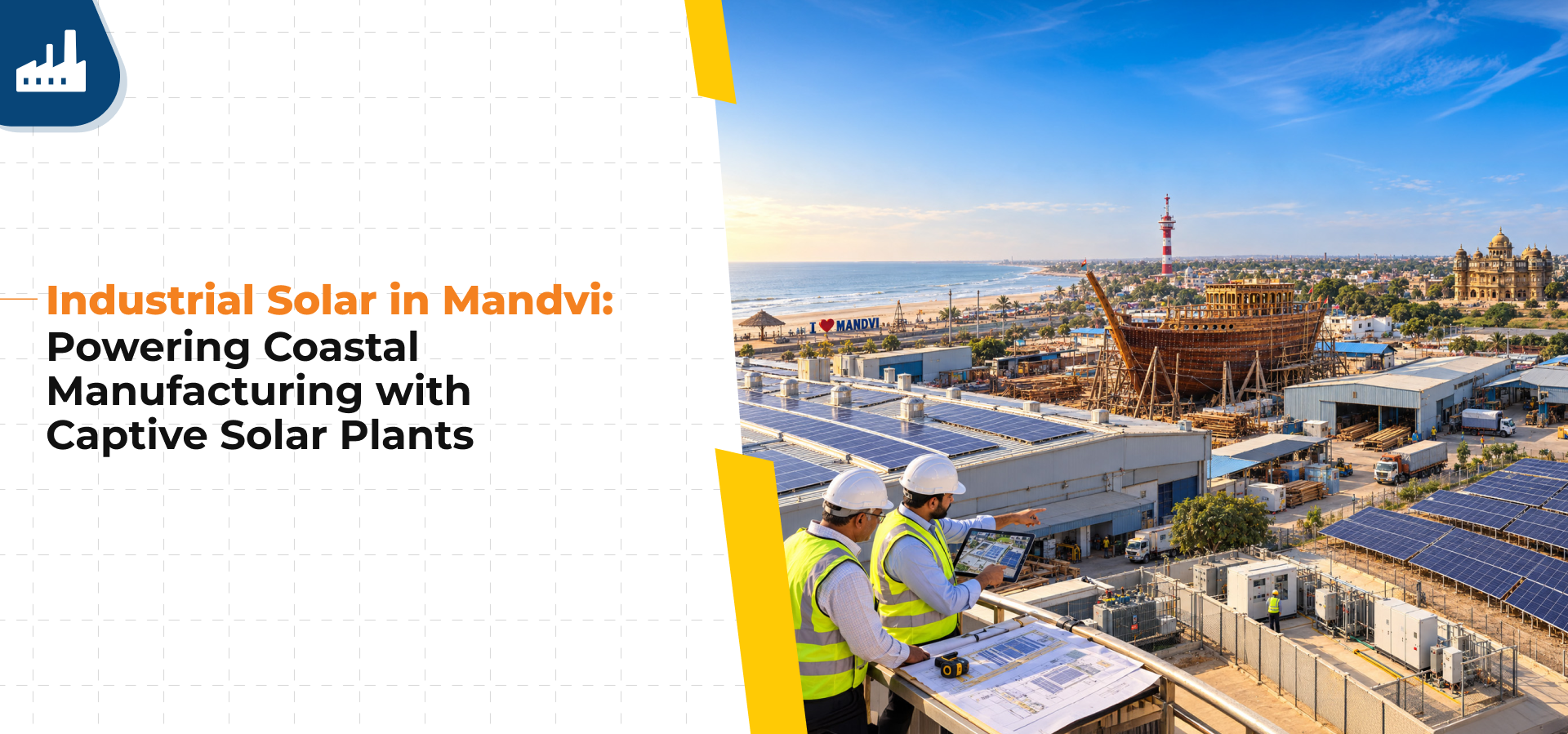
Mandvi occupies a distinct position in Kutch's industrial landscape. As a coastal town with a working port, a shipbuilding tradition and a growing manufacturing base, its industrial facilities face a combination of factors that neither a purely inland industrial hub nor a residential town has to navigate. Coastal humidity and salt accelerate corrosion in ways that affect equipment selection. Port-adjacent operations often run on power-intensive schedules tied to shipping and logistics timing. And the capital intensity of manufacturing means a solar investment carries real financial weight.
This guide covers what industrial facility owners in Mandvi should understand before committing to a captive solar plant, with named standards and indicative figures where they exist, so you can test any proposal against them.
Why Mandvi's Industrial Base Is a Different Kind of Solar Decision
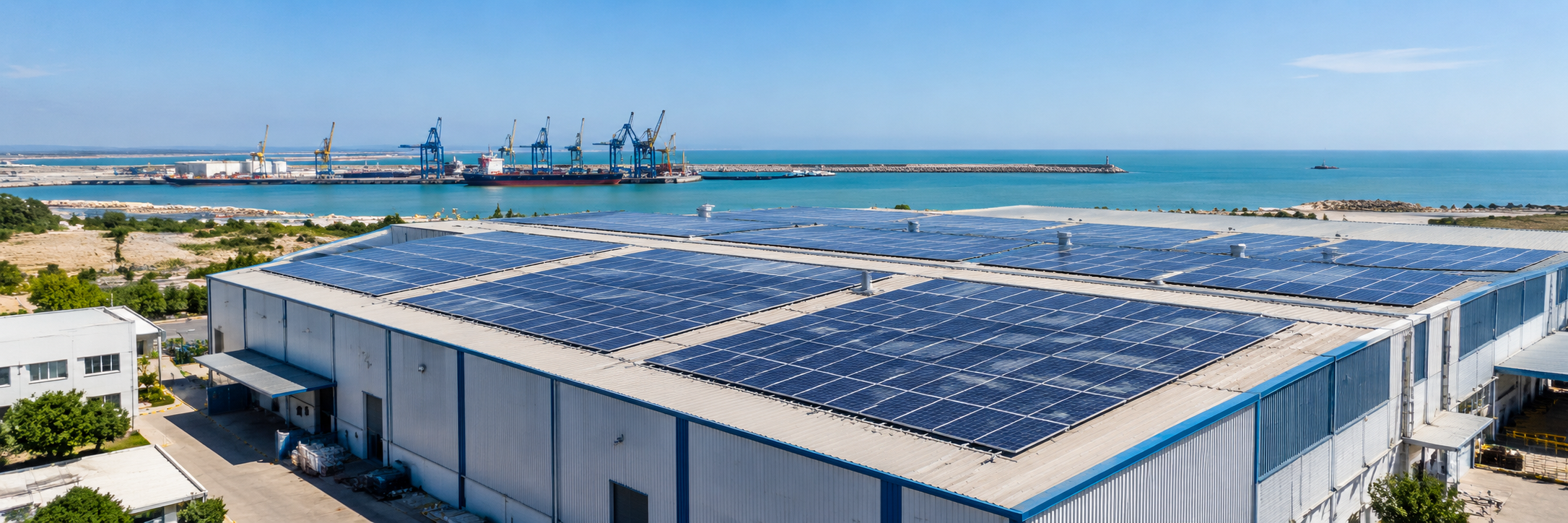
Industrial solar decisions in Mandvi cannot be approached the way they would be in an inland industrial town. Salt air and humidity corrode mounting structures, electrical enclosures and connectors much faster than in a dry inland setting. A system designed without this in mind looks identical to a properly specified one on installation day, then shows the difference within a few years through corroded hardware, degraded connections and maintenance costs that climb faster than they should.
Mandvi's manufacturing and shipbuilding operations also tend to run on demanding schedules where unplanned downtime has a real cost. Harsher conditions paired with higher financial stakes are exactly why industrial solar in Mandvi deserves a more specialized approach than a standard commercial template.
What "Captive" Actually Means for a Mandvi Factory
In everyday use, "captive solar plant" means a plant built to serve a facility's own consumption. In Indian electricity regulation, "captive" has a specific legal meaning under the Electricity Act, 2003 and Rule 3 of the Electricity Rules, 2005. A plant qualifies as a captive generating plant only if the captive users together hold at least 26% of the ownership and consume at least 51% of the electricity generated, tested annually. If the consumption test is missed in a financial year, the plant can lose captive status for that year, with cross-subsidy and open-access charges applying. Rules have been amended recently, so confirm the current text with your advisor.
In practice, Mandvi facilities usually take one of three routes:
Route | How it works | Typically suits |
On-site rooftop or ground-mounted plant (behind the meter) | Plant sits on your site and supplies your load directly, often with net metering under GERC rules | Single facilities with enough roof or land |
Group captive | Several consumers co-own an off-site plant and meet the 26% and 51% tests collectively | Consumers who need more capacity than their site can host |
Open access | Power is wheeled from a plant elsewhere over the grid, with applicable charges | Large consumers with significant load |
Net metering for rooftop systems in Gujarat is governed by the GERC Net Metering Rooftop Solar PV Grid Interactive Systems Regulations, 2016, as amended. Capacity limits and settlement terms change, so check the current regulation before finalizing system size.
For a facility running continuous or near-continuous production, a plant sized correctly against real load data can offset a substantial share of grid dependence, which directly stabilizes one of the most volatile lines in a manufacturer's cost structure. That matters especially for export-oriented manufacturers near Mandvi's port, where competitive pricing depends partly on controlling operating costs tightly.
The Coastal Corrosion Factor: Why Component Selection Matters More Here
Know Your Corrosivity Category
ISO 9223 classifies atmospheres by how fast they corrode metal. Industrial areas and coastal sites within a few kilometres of the sea typically fall in category C4 (high) or C5 (very high), and splash zones or heavy industrial pollution can push a site to CX (extreme). The first-year zinc loss rates are roughly:
ISO 9223 category | Typical setting | Zinc loss (first year) | Carbon steel loss (first year) |
C4 (high) | Industrial areas, coastal sites with moderate salinity | about 2.1 to 4.2 µm | about 50 to 80 µm |
C5 (very high) | Aggressive industrial zones, coastal sites with high salinity | about 4.2 to 8.4 µm | about 80 to 200 µm |
CX (extreme) | Offshore, splash zones, severe coastal-industrial exposure | about 8.4 to 25 µm | about 200 to 750 µm |
A site survey should assign your facility a category, because distance from the water, prevailing wind and neighboring industry all change the answer. As a rough illustration, a hot-dip galvanized coating of 85 µm divided by 4.2 to 8.4 µm of zinc loss a year suggests on the order of 10 to 20 years of zinc protection in C5, and longer in C4. That is simple arithmetic on first-year rates, not a warranty, but it shows why a 25-year plant cannot rely on a minimal coating in a coastal location.
Mounting Structure and Hardware
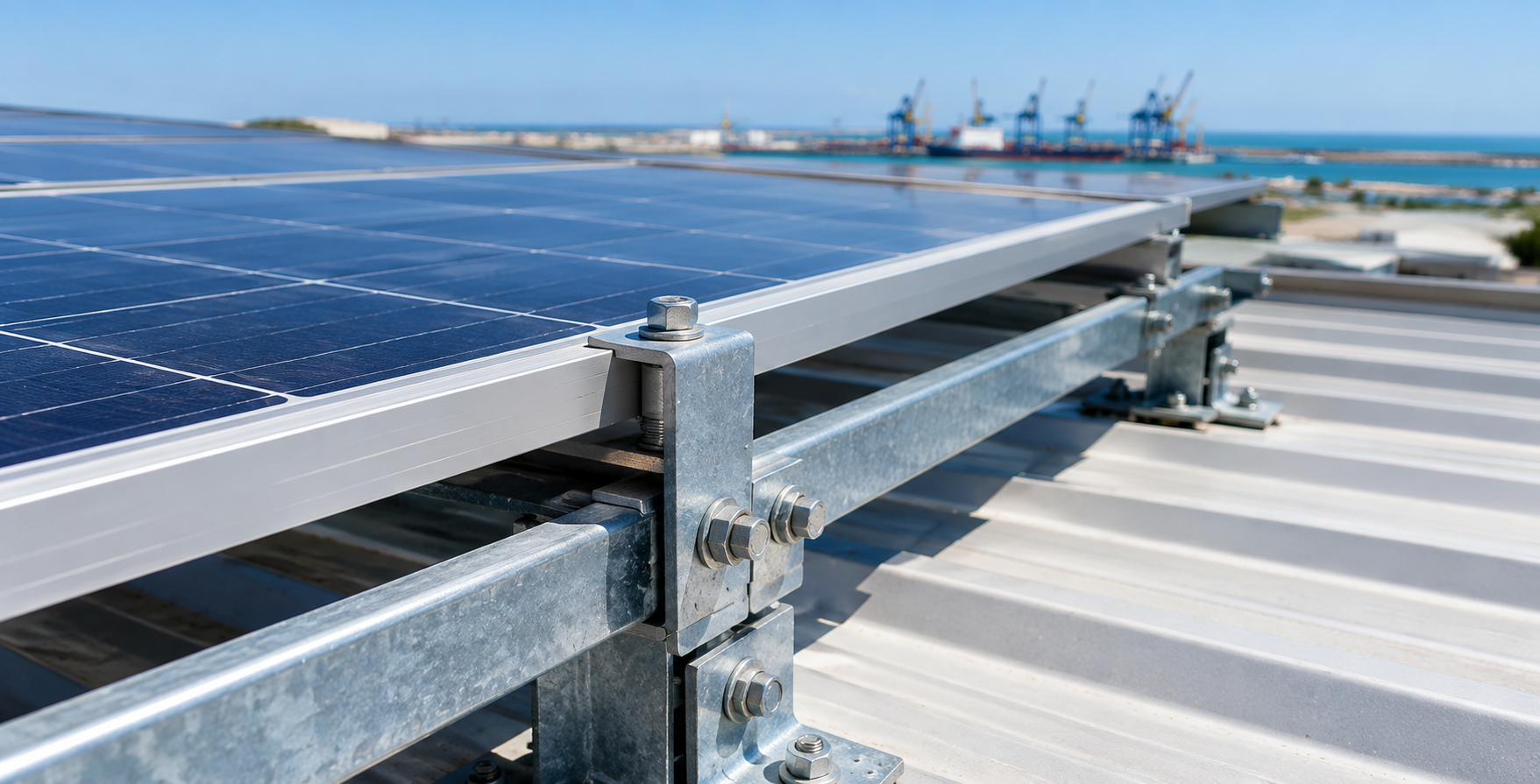
For fabricated structural steel, hot-dip galvanizing is specified under IS 4759 and ISO 1461. For steel sections 6 mm and thicker, the commonly specified mean coating is 85 µm (about 610 g/m²), with lower minimums for thinner sections. Confirm the exact values against the current standard for the section thicknesses in your design. In C5 conditions, designers often go beyond the minimum with duplex systems (galvanizing plus paint) or alternative materials.
Material | Coastal corrosion resistance | Cut edges and drilled holes | Relative upfront cost | Typical fit |
Pre-galvanized steel | Poor | Weak | Lowest | Dry, inland, low-humidity sites |
Hot-dip galvanized (HDG) steel | Moderate, depletes in salt air | Weak at raw cuts | Low | Heavy structures, with touch-up planning |
Zinc-magnesium coated steel | High, often reported at several times HDG | Self-healing film | Moderate | Coastal ground mounts and carports |
Anodized aluminium | Excellent, oxide layer does not deplete like zinc | Self-repairing surface | Highest | Coastal rooftops, weight-limited roofs |
A solar company in Mandvi that understands coastal conditions sources hardware for this environment, not a generic specification designed for a drier climate elsewhere in Kutch. For fasteners, stainless steel grade 316 (A4) is generally preferred near the coast because its molybdenum content resists chloride pitting better than grade 304.
Electrical Enclosures and Connectors
Junction and combiner boxes need an ingress protection rating suited to wind-driven spray. IP65 and IP66 both mean fully dust-tight, but IP66 withstands much heavier water jets (tested with a 12.5 mm nozzle at about 100 litres a minute, against 6.3 mm and about 12.5 litres a minute for IP65), which is why IP66 is the more common recommendation for exposed coastal sites. Neither rating covers submersion. Enclosure material also matters: polycarbonate, marine-grade stainless steel and powder-coated aluminium each have different salt-corrosion and impact trade-offs.
Cable and Conduit Specifications
Solar DC cable should be certified to a recognized standard such as EN 50618 (often together with TUV 2PfG 1169) for UV, weather and voltage performance over a 25-year life. In salt air, specify corrosion-resistant glands, lugs and conduit as well, so the cable is not the strongest link in a weak chain.
Panel Certifications That Matter on the Coast
Standard | What it tests | Coastal relevance |
IEC 61701 (salt mist corrosion) | Resistance to salt fog and humidity cycling | The key coastal test; ask for the certified severity level, with level 6 the most demanding |
IEC TS 62804-1 (PID) | Potential-induced degradation under humidity and voltage stress | Salt films and humidity speed PID |
IEC 61215 and IEC 61730 | Design qualification, safety, fire and electrical protection | Baseline for any module |
IEC 62716 (ammonia) | Ammonia resistance | Only if the site is near farms or fertilizer sources |
Always ask for the manufacturer's datasheet or test certificate confirming the severity level, since a certificate on one module model does not cover another. Also note that IEC 61701 certifies the module only, so frames, fasteners and mounts still need coastal specification.
Wind and Seismic Design: The Kutch Factor
Corrosion is only half the structural story. Under IS 875 (Part 3), Kutch falls in a high wind category, with a basic wind speed of 50 m/s commonly applied for the region. Engineers modify that figure with factors for risk, terrain, height and topography to get the design wind speed, then convert it to pressure using p = 0.6 × V². Before any factors, 50 m/s corresponds to about 1.5 kN/m². Tilted arrays behave like sails, so uplift often governs: it decides rail spans, fastener counts on metal roofs, and ballast on flat RCC roofs, with heavier restraint near roof edges and corners where turbulence is strongest.
Kutch is also in Seismic Zone V under IS 1893, the highest category in India. That raises the importance of anchoring depth, connection quality, light well-braced frames and low overturning moments on the building below. Wind and seismic checks should both appear in the structural calculation, and your EPC should be able to show them.
Sizing a Captive Plant Against Manufacturing Load Patterns
Unlike a residential system, an industrial plant must be sized against detailed, often hour-by-hour, consumption data. Shift patterns decide when the facility actually draws power, and seasonal swings in production change the profile again. A plant sized from an annual average can overproduce at hours when the factory is idle and still miss the evening shift.
Here is an illustrative example, not a client project. A facility uses about 100,000 units a month, or 1.2 million units a year, and wants to offset roughly 30% of that with daytime solar. That is about 360,000 units a year. At an indicative 1,500 to 1,700 kWh generated per kW per year in Kutch, the plant would be around 210 to 240 kW. At roughly 70 sq ft per kW on a metal sheet roof, that needs about 15,000 to 17,000 sq ft of usable roof, while flat RCC roofs with tilted frames typically need closer to 95 to 100 sq ft per kW. Real results depend on orientation, shading, soiling and design, which is why a survey comes first.
See our guide to what a site survey checks in Adipur for the same method applied to smaller properties.
Rooftop Versus Ground-Mounted: What Mandvi's Industrial Sites Typically Need
Factor | Rooftop | Ground-mounted |
Land | No extra land needed | Needs adjacent land |
Area per kW | About 70 sq ft on metal sheet, about 95 to 100 sq ft on RCC | Depends on layout and row spacing |
Structural check | Roof capacity, wind uplift and seismic checks essential | Foundation and soil design essential |
Capacity ceiling | Limited by usable roof | Scalable with land |
Best for | Facilities with large sheds and warehouses | Higher loads or surplus land |
Many of Mandvi's established manufacturing sites have substantial shed roof area, which makes rooftop solar in Mandvi a natural starting point. Facilities with load beyond what the roof can host should evaluate a ground-mounted supplement, a decision best made during a proper site assessment rather than assumed in advance.
Finding the Best Solar Company in Mandvi for an Industrial Project
Searching for the best solar company in Mandvi returns plenty of general results, but captive industrial plants need a different level of expertise than a residential or small commercial job. Verify three things before committing.
Demonstrated Experience With Coastal Industrial Installations
Ask whether the company has designed specifically for coastal conditions. A coastal specification rarely appears in a standard proposal unless the installer has genuine experience with it. Ask which corrosivity category they assigned to your site and why.
Engineering Capability for Complex Load Profiles
A top solar company in Mandvi working on an industrial plant should be able to walk you through how it analyzes your consumption data, rather than offering a size based only on available roof area.
Track Record With Comparable Manufacturing Facilities
Ask for references from industrial or manufacturing clients with similar operating patterns, not a portfolio that blends residential work with industrial-scale projects.
What a Genuine Solar EPC Company Delivers for Industrial Projects
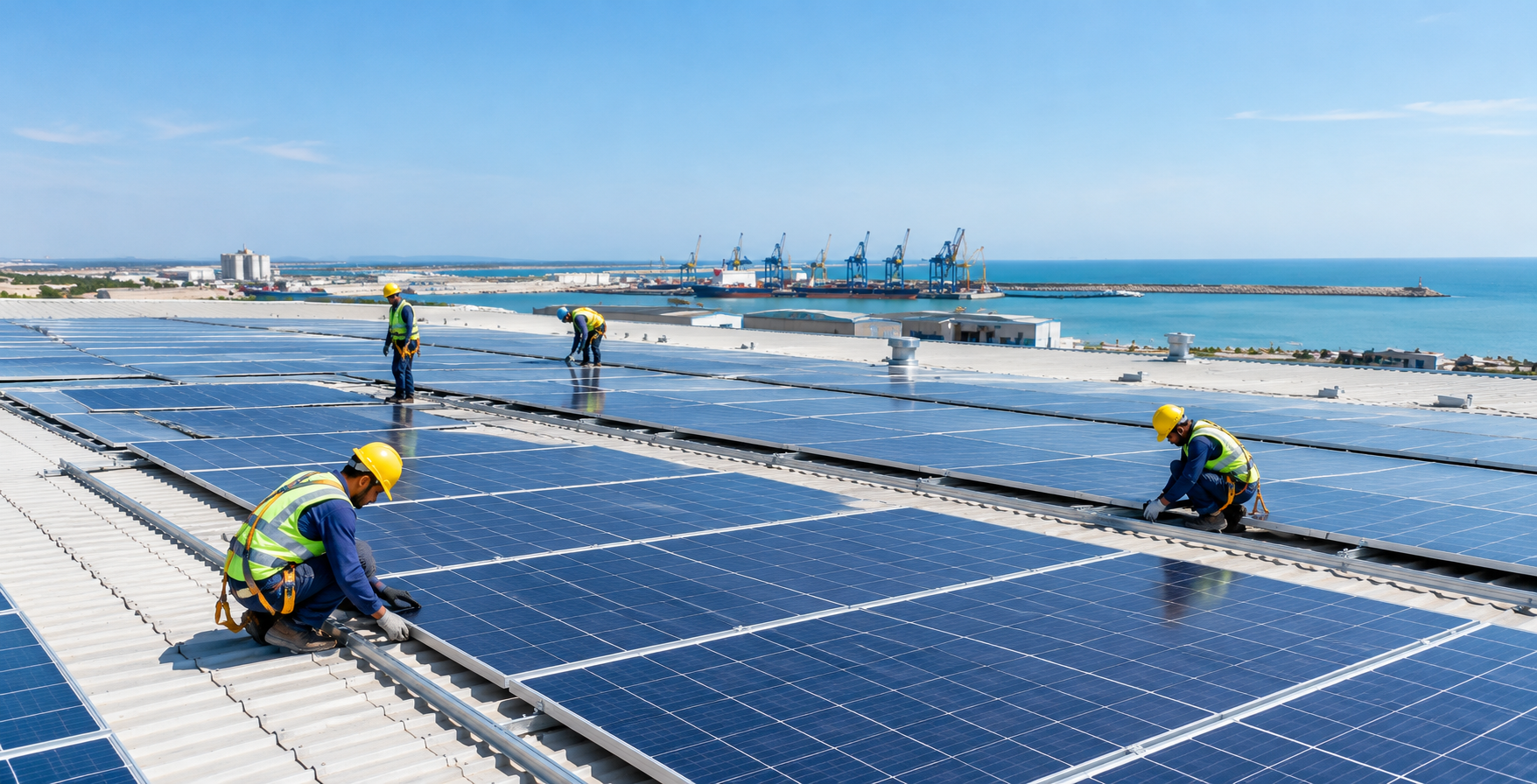
Many providers describe themselves as the best solar EPC company, but for an industrial plant genuine EPC capability means engineering, procurement and construction run as one coordinated process. Industrial projects involve more complex electrical architecture, larger capital and tight coordination to avoid disrupting production during construction.
When one organization handles design, sourcing and construction, coastal specification decisions made in engineering carry through into procurement and installation, instead of being diluted or substituted somewhere along a fragmented vendor chain. For a Mandvi facility, that is how a 316 fastener specification or an IP66 enclosure requirement survives to the roof.
What the Installation Process Looks Like for an Industrial Captive Plant
Understanding the sequence behind a solar installation in Mandvi helps set realistic expectations:
Site assessment: roof or land condition, structural capacity, corrosivity category, shading, and consumption data across shifts and seasons.
Engineering and design: system size, layout, wind and seismic checks, electrical architecture and coastal component specification.
Procurement: sourcing certified modules, structures, enclosures and cables, which can mean longer lead times for specialized coastal hardware.
Construction: phased and coordinated with production schedules, with work-at-height and hot-work safety controls, especially near fuel or port operations.
Testing and commissioning: confirming performance and protection settings before grid integration, followed by documented handover.
Maintenance Considerations Specific to Coastal Industrial Plants
A coastal plant needs a different maintenance program from an inland one. Inspect mounting hardware, fasteners and electrical connections more often for early corrosion signs, and treat damaged coating at cut edges and holes before rust spreads. Salt and dust together form a harder deposit than dust alone, so cleaning schedules usually need to be tighter in dry months, commonly every two to three weeks, adjusted from your own generation data. Wash early morning or evening to avoid thermal shock, use soft water and soft brushes rather than dry wiping, and avoid hard borewell water that leaves scale. Tracking daily generation on the inverter is the simplest way to see when output has dropped far enough to justify a wash.
A best solar service provider in Mandvi should be able to describe how its maintenance program accounts for these coastal factors, instead of offering the same schedule it would give an inland site elsewhere in Kutch.
The Financial Case for Captive Solar in Mandvi's Manufacturing Sector
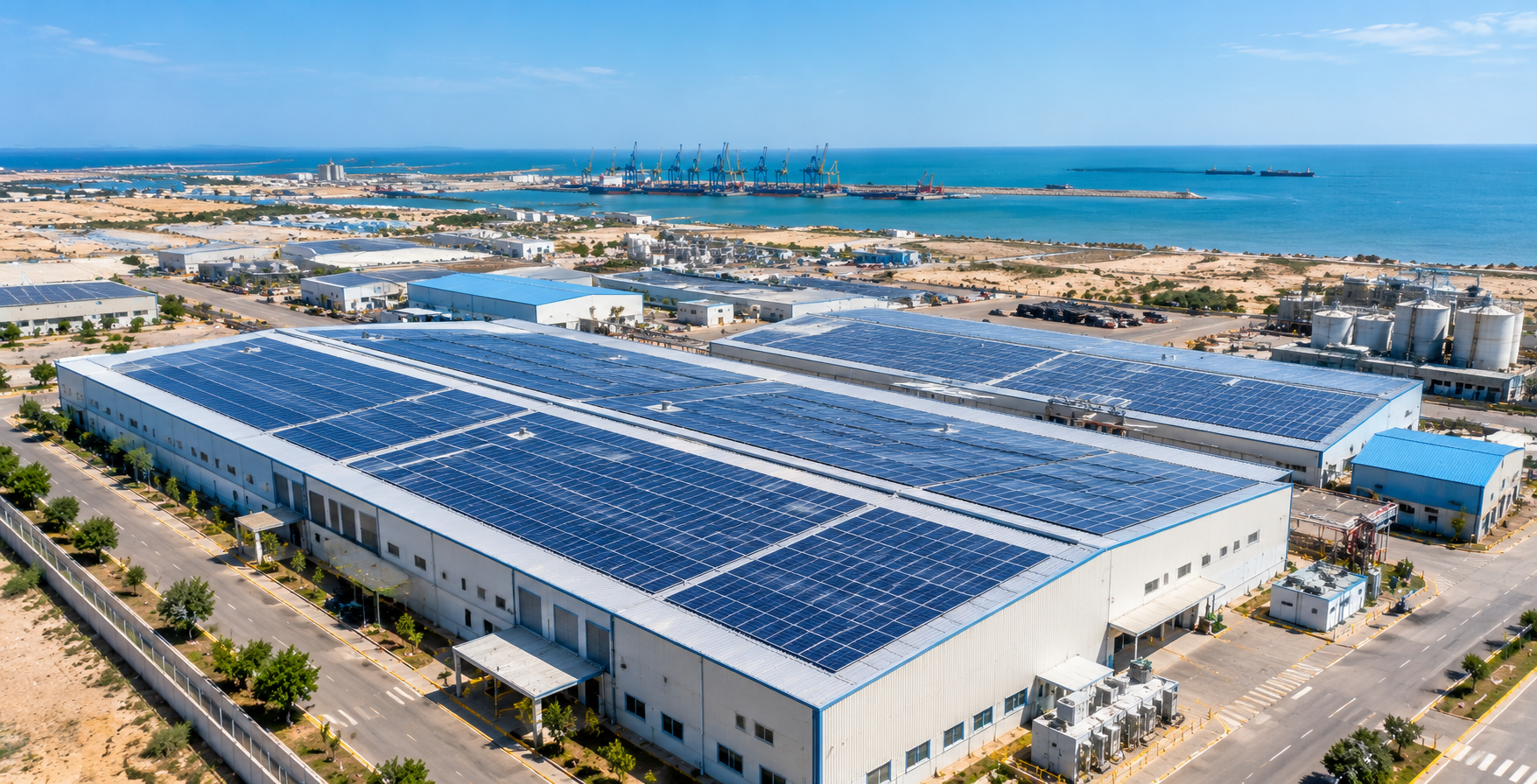
The calculation comes down to upfront cost against projected savings over the plant's life, given your consumption pattern and current grid tariff exposure. Export-oriented manufacturers often value the predictability of captive generation when pricing against international buyers.
Two India-specific levers are worth raising with your tax and regulatory advisors. First, businesses that own the plant on a capex basis have been able to claim accelerated depreciation on solar equipment, commonly cited at 40% on a written-down value basis, with a reduced first-year rate if the asset is used for under 180 days. Rules change with tax law updates, so confirm the current provisions. Second, net metering or open-access terms under GERC rules affect how surplus power is credited. Financing structures also differ from ordinary commercial loans, and may involve project finance tied to expected generation and savings, or capital expenditure financing within broader business funding.
Residential and Commercial Solar in Mandvi's Broader Context
This guide focuses on industrial plants, but Mandvi's solar market is wider. Residential solar in Mandvi follows similar logic to elsewhere in Kutch, sized against household consumption and specified for the coastal climate at a much smaller scale. Commercial solar in Mandvi, covering retail, hospitality and smaller businesses, sits between the two in scale and complexity, with coastal component considerations applying across all three categories depending on distance from the shoreline.
What to Ask Before Committing to an Industrial Captive Plant
Has the company completed captive or industrial plants for coastal facilities, and can it provide verifiable references?
Which ISO 9223 category was assigned to my site, and what coating, material and fastener grade does that drive?
Are modules certified to IEC 61701 salt mist (which severity level) and IEC TS 62804-1 PID, and can I see the certificates?
How is the structure designed for IS 875 wind loads and IS 1893 Seismic Zone V?
Is sizing based on shift-based consumption data or a simplified estimate?
What does the maintenance program specifically cover for coastal wear, and how often?
How will construction be coordinated to minimize disruption to production?
Conclusion
Industrial solar in Mandvi is not simply a scaled-up commercial installation. Coastal humidity, salt air, high wind and seismic loads, and the operating demands of manufacturing and shipbuilding call for engineering specificity that a generic inland template does not provide. Facility owners need a provider who understands coastal component selection and can size a system against real industrial load patterns.
White Desert Power Projects designs industrial and captive solar plants across Kutch's coastal and inland sites, with component specification and system design built around Mandvi's combination of coastal exposure and industrial-scale power demand.
Evaluating a captive solar plant for your manufacturing facility in Mandvi? talk to White Desert Power Projects for a system design built around your actual load profile and coastal conditions.